Choose a base for the days you want
A palace-and-neighbourhood trip benefits from an accommodation base that makes those visits easy, while a trip centered on a different part of Seoul may justify a different location. Compare complete journeys to your intended activities rather than using the word “central” as a substitute for a route.
Map the exact station entrance, accommodation entrance and walking leg with luggage. Check lift access and transfers if your party needs them. Plan your arrival and departure first; an attractive room price can lose its advantage if it creates a difficult final connection.
A proposed four-day sequence you can rearrange
| Day | Main focus | Booking or access check |
|---|---|---|
| 1 | Arrival and one local neighbourhood walk. | Transport at the actual arrival time; accommodation check-in. |
| 2 | Gyeongbokgung and one nearby interest. | Regular closure, seasonal hours and the exact visitor entrance. |
| 3 | A permitted Bukchon visit, with a separate nearby cultural stop. | Restricted-zone hours and current on-site signs. |
| 4 | One chosen district or indoor interest, then departure. | Door-to-door return journey and reservation flexibility. |
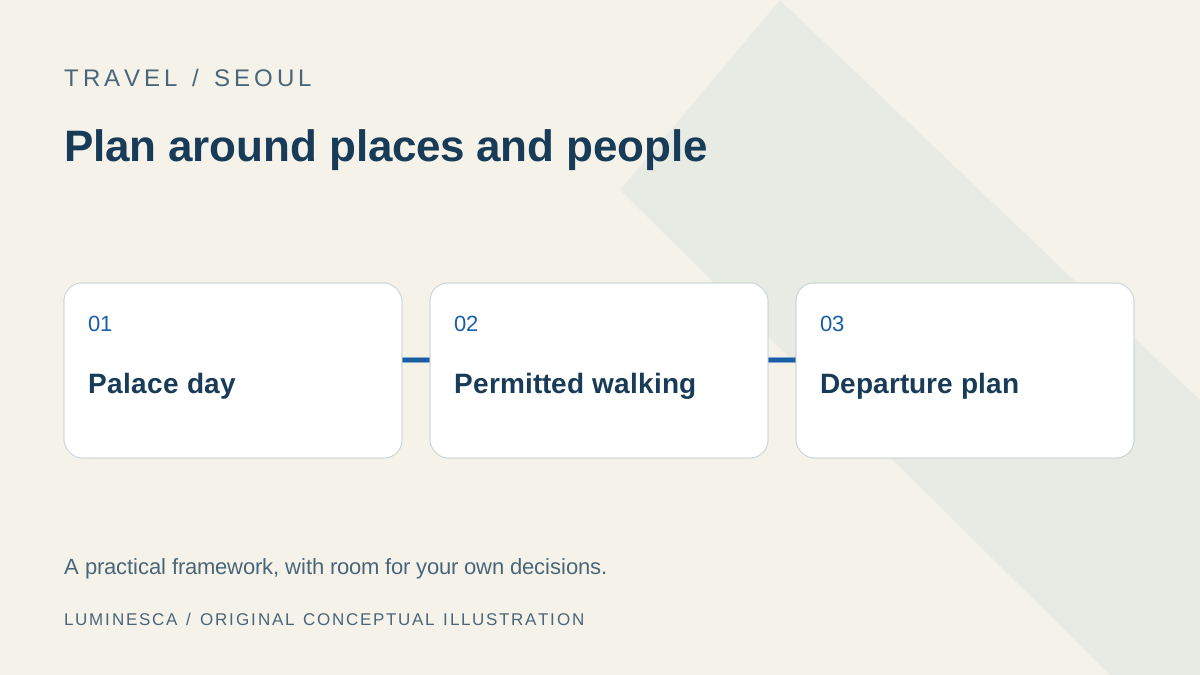
This is an editorial outline, not a timed package. The day numbers are movable: do not put Gyeongbokgung on a regular closure day just because it appears as “day two” in a guide. Replace a closed venue with an activity you actually want, then move the palace visit.
The palace day has its own opening rules
Visit Seoul lists Gyeongbokgung’s regular Tuesday closure. Check current holiday exceptions, seasonal hours, admission and event notices before reserving adjacent activities. A palace day and a special evening event can have different conditions.
Choose whether the main purpose is architecture, a guided explanation, photography or a nearby museum. Giving that purpose a realistic block is more useful than promising to see every palace in one day. Leave a flexible meal break and do not assume that another attraction’s ticket includes this one.
Use the official site and on-site information for the actual entrance and visitor route. Clothing rental, tours and transport are separate purchases with separate conditions; confirm what your own booking includes.
Bukchon is a neighbourhood with restricted visitor access
The official tourism page describes the Bukchon Special Management Area’s Red Zone and restricted tourist visiting hours. At this review, the page lists permitted tourist visiting hours as 10:00–17:00, with entry into restricted areas prohibited from 17:00 to 10:00 the following day. Follow the current map and posted signs; do not apply this as a blanket statement about every street, resident or accommodation in wider Bukchon.
Arrange the visit inside the permitted window, keep voices low and avoid obstructing entrances. If an attractive photo location lies beyond a restriction, choose another view. An older all-hours walking itinerary should not override the current visitor rules.
The surrounding visit can still include a separate cultural stop. Check that venue independently rather than treating “Bukchon” as one ticketed attraction with a single opening schedule.
Price and time the complete transport route
Use Visit Seoul’s transport information to identify the airport and city connection that matches your arrival. Incheon and Gimpo are different airports; confirm the airport on the ticket before planning the journey. Then check the operator’s current service for the actual date and time.
- Start with your airport terminal and accommodation address.
- Record the interchange and final station entrance, not just the line name.
- Check first or last service when a flight arrives early or late.
- Keep a realistic alternative if immigration or baggage takes longer.
- Check the departure route again before the last day.
A rail travel time does not cover baggage collection, queues or hotel walking. When comparing two bases, include those final walking legs and the number of transfers.
Budget in KRW and keep expensive extras separate
Illustrative calculation using assumed inputs: two people, four days and three nights, one room at KRW 150,000 per night, food at KRW 40,000 per person per day, and KRW 130,000 combined transport and activities produce KRW 900,000 before reserve. A 10% reserve gives KRW 990,000 total, excluding flights. These are example inputs, not verified Seoul prices.
Enter actual quotes in the budget workbook. Put a day tour, premium event or clothing rental on its own line, and check which costs apply per person. A plan with fewer paid activities can have a different budget from one with the same number of nights.
Confirm entry-document requirements through the relevant official authority. Keep weather and opening notices close to departure, and choose an indoor alternative with verified operating hours. This guide does not guarantee seasonal colors, snow, event availability or a particular travel-document outcome.
Sources: review and scope
Sources checked 10 October 2026. Independent, AI-assisted writing checked against the specific references below. Neighbourhood groupings, day order and budget examples are editorial planning suggestions, not an account of our own visit. Transport, opening hours and entry conditions can change; recheck the linked operators for your actual dates.
- Visit Seoul: Gyeongbokgung Palace, including regular Tuesday closure
- Visit Seoul: Bukchon Hanok Village and the Special Management Area
- Visit Seoul: transportation information
- Seoul Hanok: visitor facilities and information
Send a correction with the page, source and relevant version or travel date.